Can a 3-in-1 internal supplement tackle the unique environmental and hormonal triggers of Indian male hair loss? We break down the science of OZiva’s new Shilajit-infused formula and its impact on DHT and follicle health.
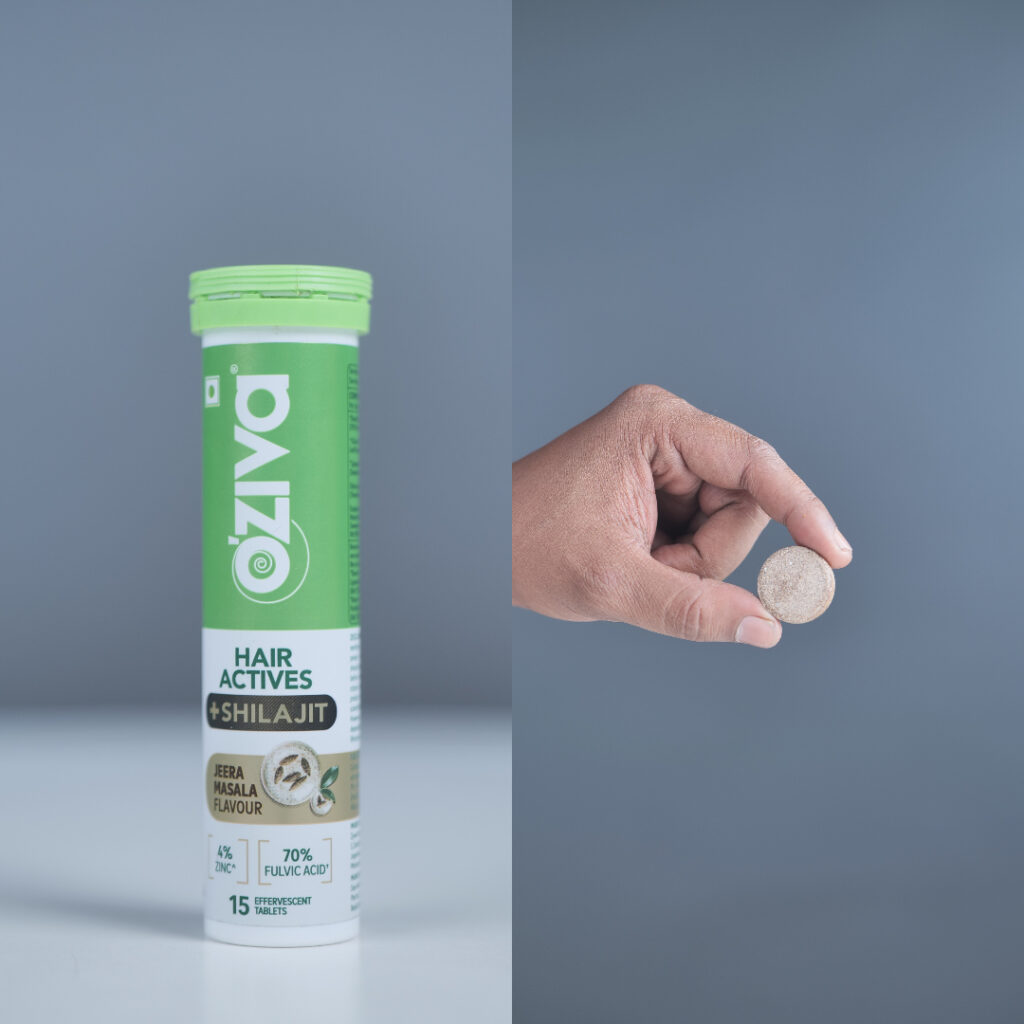
Hair fall and hair loss are not any niche issues men in India are suffering from. Dermatologists across the country report that men in their mid-twenties are now presenting with visible thinning, receding hairlines, and reduced scalp density. According to the International Society of Hair Restoration Surgery, India has one of the highest rates of androgenetic alopecia in the world, affecting roughly a 58 percent of men by the age of 30. A study published in the International Journal of Trichology found that hair loss in Indian men is occurring almost a decade earlier than it did in the previous generation.
As per a study by Traya, around 50.31% of Indian men are suffering from hair loss and hair fall. A majority of them are below 25. While men from almost all parts of India face issues related to hair, from dandruff to fall, we at the BFH team found that certain regions are the most prone to them. To be specific, men in Northern India face these issues the most, mostly due to high pollution. Other regions include urban tech cities, humid coastal regions, etc.
The reasons are not mysterious. They are well-documented and, in the Indian context, unusually compounded by environment, lifestyle, and biology operating together.
Why Are Indian Men Losing Hair Faster?
DHT, or dihydrotestosterone, is the primary hormonal driver of male pattern hair loss. It is produced when the enzyme 5-alpha reductase converts testosterone into DHT. At elevated levels, DHT binds to hair follicle receptors and progressively miniaturises them, shortening the growth cycle until the follicle stops producing hair altogether. This process is genetic in its sensitivity, but it is accelerated sharply by external conditions.
Indian urban men carry an unusually high environmental burden. Cities across the country rank among the most polluted in the world. Fine particulate matter, PM2.5 and PM10, settles on the scalp daily, clogging follicles, stripping the scalp’s protective barrier, and generating oxidative stress that damages follicle cells at the molecular level. Research published in the Journal of Emerging Technologies and Innovative Research confirms that pollution exposure directly reduces key proteins responsible for hair anchoring and structural integrity.
Hard water is a separate but equally significant problem. Approximately 70 percent of Indian households receive mineral-heavy water. The calcium and magnesium deposits left on the scalp and hair shaft cause dryness, breakage, and follicle blockage that worsens with every wash.
Climate adds further pressure across different regions. Coastal cities such as Mumbai and Chennai deal with humidity levels that regularly exceed 70 to 80 percent during monsoon and pre-monsoon months, creating congested, bacteria-prone scalp conditions. Cities with extreme seasonal heat, particularly in central and western India, see scalp dehydration and early follicle shedding through summer. The monsoon transition itself is a documented trigger for telogen effluvium, the condition where a large proportion of follicles shift into the shedding phase simultaneously.
Nutritional deficiencies compound all of this. Despite diverse diets, large sections of the Indian male population are deficient in iron, zinc, vitamin D, and protein. All four are directly involved in hair follicle function. Protein is the structural material of the hair shaft. Zinc inhibits the enzyme that produces DHT. Iron carries oxygen to follicles. Vitamin D regulates the follicle growth cycle. When multiple deficiencies exist simultaneously, hair loss accelerates even in men without strong genetic predisposition.
Stress is the final layer. Sustained high cortisol, common among men in high-pressure urban work environments, pushes follicles into the telogen phase prematurely. Studies show this effect is dose-dependent: the longer cortisol stays elevated, the more follicles exit the active growth phase. Sleep deprivation amplifies it further.
Most products sold for male hair loss in India address one or two of these factors, usually topically. Shampoos and serums work at the surface. They cannot reach the hormonal environment, correct nutritional deficiencies, or protect follicle cells from oxidative damage. That gap is where internal supplementation becomes relevant.
What Is OZiva Hair Actives + Shilajit for Men Actually?
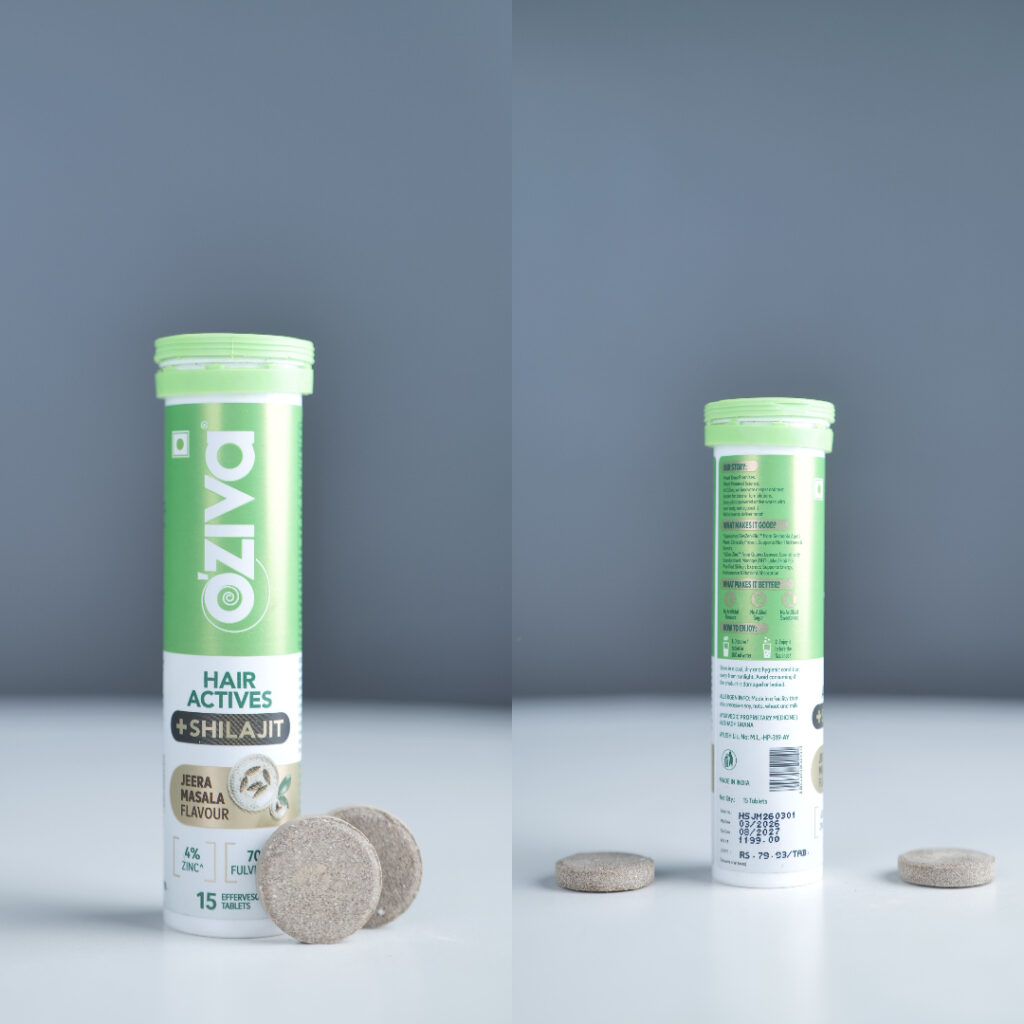
OZiva recently launched this product in April 2026 as a clinically backed internal supplement designed specifically for men. It is positioned as a 3-in-1 formulation that works on three levels simultaneously:
- Improving nutrient absorption
- Regulating DHT conversion
- Stimulating new hair growth at the follicle level.
The format is an effervescent tablet, one dissolved in water after a meal, once daily. The formulation is built around three primary actives.
- The first is Shudh Shilajit, standardised to a 70 percent fulvic acid.
- The second is GZen-Zinc, a proprietary zinc complex derived from guava leaf extract.
- The third is Liposomal SesZen-Bio, sourced from the Sesbania agati plant and delivered through liposomal technology.
Each of these addresses a distinct biological mechanism, which is what separates this formulation from generic hair vitamins.
Where Does Shilajit Fit In Men’s Hair Care?
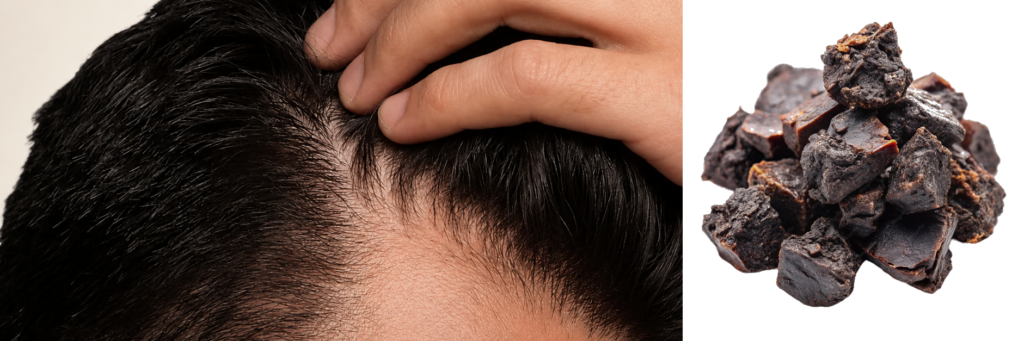
Shilajit is a resinous substance formed over centuries from the compression of organic plant matter in high-altitude rock formations, primarily the Himalayas. It has been used in Ayurvedic medicine for centuries, but modern research has clarified the specific mechanisms that make shilajit for hair growth quite relevant.
The primary active compound is fulvic acid, a naturally occurring organic acid that functions as a carrier molecule. Fulvic acid improves the absorption of minerals and nutrients at the cellular level. For hair follicles, this has a direct practical consequence: a follicle that is receiving poor nutrient delivery cannot produce healthy hair regardless of how adequate the diet is. Fulvic acid improves the efficiency of nutrient uptake at the follicle itself.
Shilajit also contains zinc, which serves a dual function in hair health. It is a structural component of the hair shaft and a mild inhibitor of 5-alpha reductase, the enzyme that converts testosterone into DHT. This positions Shilajit as a hormonal regulator rather than a DHT blocker, and the distinction matters clinically.
A double-blind, placebo-controlled clinical study found that men taking 250mg of purified Shilajit twice daily for 90 days showed a significant increase in total testosterone, free testosterone, and DHEAS levels. Critically, unlike synthetic testosterone boosters, Shilajit does not produce a corresponding spike in DHT. The zinc present in Shilajit partially limits how much of the increased testosterone gets converted into the hair-damaging hormone. This makes it suitable for men with androgenetic alopecia concerns in a way that testosterone boosters generally are not.
Beyond hormones, Shilajit is a strong antioxidant. The fulvic and humic acids it contains neutralise free radicals and reduce oxidative stress at the follicle level. In the Indian urban context, where environmental oxidative load is high for large parts of the year, this is a meaningful benefit. Oxidative stress is one of the less-discussed but well-documented contributors to premature follicle damage in polluted environments.
Shilajit’s adaptogenic properties also help regulate cortisol, indirectly supporting hair by moderating one of its most common triggers.
Can Guava Leaf Extract Actually Block DHT Without Killing Your Testosterone?
The second active, GZen-Zinc, uses guava leaf extract as its zinc delivery vehicle. Guava leaf has documented 5-alpha reductase inhibiting properties, working in the same pathway that pharmaceutical DHT blockers target but without the side-effect profile associated with drugs like finasteride.
This component directly addresses the hormonal root cause of follicle miniaturisation. It does not suppress testosterone. It modulates the conversion rate of testosterone into DHT, keeping DHT within a range that does not trigger follicle damage. This is a more targeted approach than flooding the body with generic zinc supplements, where bioavailability is often poor.
Why Does Biotin Fail Most Men, and What Does Liposomal Delivery Change?
The third active addresses what most hair supplements ignore: the delivery problem. Standard biotin supplementation is popular, but its effectiveness is limited by bioavailability. Most biotin consumed orally circulates in the bloodstream without reaching follicle cells in sufficient concentration to drive meaningful change.
Liposomal technology solves this by wrapping the active compound in a lipid bilayer that mimics the cell membrane. This allows the compound to bypass standard absorption barriers and deliver biotin directly to follicle cells where it is needed for keratin synthesis and growth stimulation.
SesZen-Bio, derived from Sesbania Agati, uses this delivery mechanism. Clinical data on the ingredient shows up to a 46.39 per cent improvement in hair thickness, a 20.52 per cent improvement in hair density, and a 17 per cent improvement in hair strength. OZiva’s own clinical claim for the full formulation is that 96 per cent of participants in their study saw up to 10,800 new hair strands within four months.
It is worth being clear that these figures are based on studies of the individual plant actives. Independent clinical trials on the complete combined formulation are not yet widely published. The ingredient-level evidence is strong. The combined product evidence is still developing.
What Else Do You Need to Do?
This needs to be stated plainly. OZiva Hair Actives Shilajit is not a clinical DHT blocker. It will not halt aggressive genetic hair loss the way pharmaceutical interventions do. It will not reactivate follicles that have been dormant for several years. For men with advanced male pattern baldness seeking medical-grade intervention, this is not that product.
It is also not a standalone solution. You have to take in other measurements as well. If you live in a high-pollution city, rinse your scalp after coming indoors. Use a mild, sulphate-free shampoo three to four times a week rather than daily harsh washing. Install a water softener or shower filter if you have access to hard water. These are not expensive interventions, and they change the baseline condition of your scalp.
Eat protein at every meal. Hair is made of keratin, which is a protein. If your diet is low in protein, no supplement can fully compensate. Eggs, legumes, dairy, and lean meat are all sufficient sources. Get a basic blood test that includes iron, ferritin, zinc, and vitamin D. Deficiencies in these are extremely common among Indian men, and all four directly affect hair growth. If deficiencies exist, they need targeted supplementation beyond what a hair product can provide.
Sleep and stress are not soft variables. Chronic high cortisol is one of the clearest documented drivers of premature hair shedding. If you are sleeping five hours a night and carrying sustained work stress, your hair cycle will reflect it regardless of what you are taking.
Verdict
OZiva Hair Actives + Shilajit is a more logically constructed supplement than most of what exists in this category in India. The three-active formulation addresses the actual biological mechanisms behind male hair loss: DHT conversion, nutrient delivery to follicles, and oxidative stress, rather than just flooding the body with generic vitamins.
The Shilajit component is the most substantiated ingredient, with consistent clinical evidence supporting its role in testosterone balance, DHT moderation, and antioxidant protection. The liposomal delivery mechanism for biotin is a meaningful formulation advantage over standard supplements. The GZen-Zinc component targets DHT regulation in a way that is relevant to the majority of Indian men dealing with hormonally driven thinning.
The effervescent format makes it easy to stick with daily, which is important since results take consistent use over a few months.
For men in their mid-twenties to late thirties dealing with early to moderate thinning linked to a combination of DHT sensitivity, nutritional gaps, stress, and environmental exposure, this is a supplement worth trialling through the full recommended duration. Expect gradual improvement rather than rapid change, and build the basics around it.
OZiva Hair Actives + Shilajit for Men is available at oziva.in. Best For Him received this product as part of a review and placement evaluation. Editorial assessment is independent.
