From transforming rural retail through Star Localmart to driving innovation across one of India’s fastest-growing diversified business groups, Shrenik Ghodawat represents a new generation of business leaders who balance legacy with reinvention. As the Managing Director of the Sanjay Ghodawat Group, he oversees businesses spanning aviation, FMCG, retail, education, energy, and more. Recognised with honours including the Times 40 Under 40, Young Business Tycoon, and Entrepreneur 35 Under 35 awards, Ghodawat has consistently championed quality, consumer trust, and rural empowerment. In this exclusive conversation with Best for Him, he speaks candidly about leadership, nutrition, calculated risk, and why meaningful impact always outweighs rapid growth.
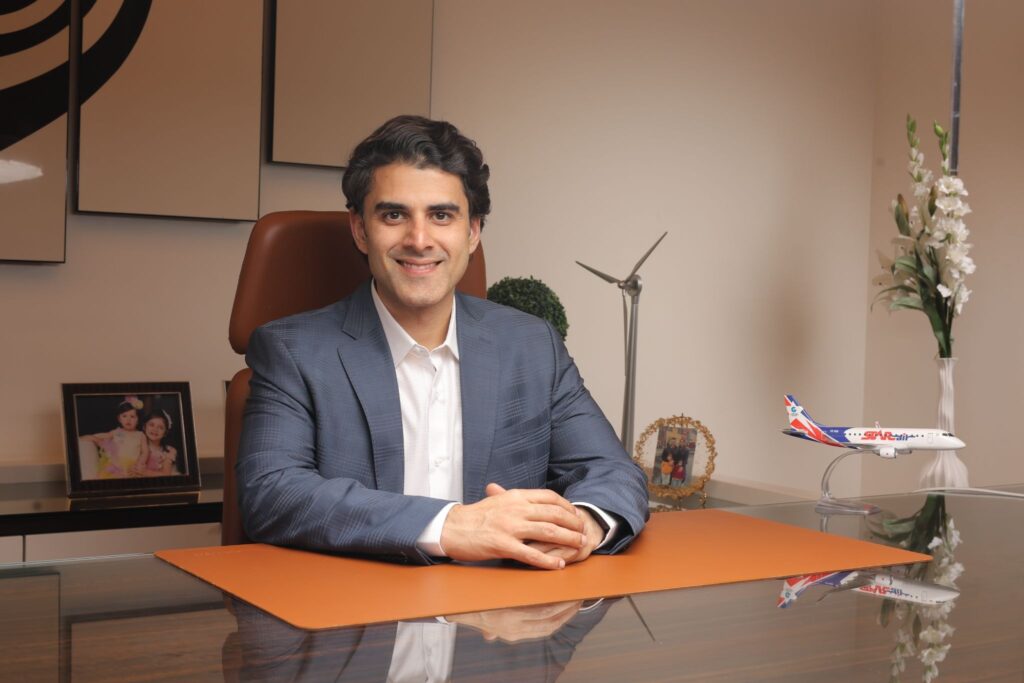
Shrenik Ghodawat is the Managing Director of the Sanjay Ghodawat Group, one of India’s leading diversified conglomerates with interests across FMCG, aviation, retail, education, renewable energy, textiles, and real estate. Joining the family business at a young age after studying Business Management in Bengaluru and International Business in Belgium, he has played a pivotal role in scaling Ghodawat Consumer and conceptualising Star Localmart, a rural-first retail ecosystem. Under his leadership, the group has accelerated its growth while maintaining a strong focus on quality, innovation, and consumer trust. His contributions have earned him recognitions such as Times 40 Under 40, Young Business Tycoon, Business Leadership Award, and Entrepreneur 35 Under 35. Today, he continues to champion responsible entrepreneurship, rural development, and sustainable business practices while steering the group’s next phase of expansion.
1. Sanjay Ghodawat Group has its fingers in aviation, energy, retail, education, FMCG, and more. When you personally sit down and think about the group’s future, is health technology somewhere on that list? Or is that still too far from the core?
A. At Sanjay Ghodawat Group, we have always believed in building businesses where we can create long-term value with credibility, operational strength, and meaningful impact. While healthcare and health technology are undoubtedly important and high-potential sectors, at this stage, they are not part of our core strategic focus. Our priority remains strengthening and scaling our core sectors such as aviation, retail, FMCG, and education.
2. Star Localmart started as a rural-first retail model. Locally sourced, locally sold. What does that mean for what men in smaller towns are eating every day? Do you think the nutritional conversation in India even reaches them?
A. Food is deeply connected to health, family, and everyday well-being. Yet for many people in smaller towns, nutrition is often shaped more by availability than by choice. Where you live should not determine the quality of food that reaches your plate. The nutrition conversation in India is still largely urban-centric. While awareness around healthier eating is growing, it has not reached every household equally. The real opportunity lies in making nutrition a mainstream conversation across India, not just in its cities.
3. Ghodawat Consumer Limited built the Ghodawat Analytical and Research Centre, which is a serious infrastructure investment. But most people don’t associate an FMCG brand with that level of scientific rigour. Where did that instinct come from?
A. Investing in the Ghodawat Analytical and Research Centre wasn’t just a business decision; it was a personal conviction. Quality and safety in FMCG should be non-negotiable. I’ve always believed that if you want to build trust with consumers, you must go beyond compliance and set your own standards. That instinct comes from observing global best practices. In a market flooded with shortcuts, our research centre is a statement: we’re here to do things the right way, even if it’s not the easiest or fastest path.
4. There’s a version of the story where a second-generation leader just inherits things and keeps them running. And there’s another version where they break things and rebuild. Which one are you? And be honest.
A. I see my role as both a steward of our legacy and a catalyst for evolution. While I have inherited a strong foundation from my father, I have always believed that simply maintaining the status quo is not sufficient in today’s rapidly changing world. My focus is on rebuilding and innovating where necessary, while preserving the core values and strengths that have brought us this far. I have made bold bets, some have paid off, others have offered valuable lessons. Ultimately, my approach is one of respectful reinvention: honouring our heritage while pushing boundaries to ensure the group thrives for the next generation.
5. You’ve been in rooms with your father, who built this from nothing. What is the one decision he made that you still don’t fully agree with?
A. I wouldn’t say there’s a decision I fundamentally disagree with. If anything, there were times when I wondered whether we were expanding too quickly into new sectors. But over time, I came to appreciate that those decisions were rooted in conviction, foresight, and a willingness to think beyond conventional boundaries. What I learned from watching my father is that entrepreneurship often requires making bold decisions before all the answers are available. Not every move is without risk, but growth rarely comes from staying within your comfort zone. His ability to back his vision with confidence is a lesson that continues to shape my own approach to leadership.
6. The FMCG space is full of products that claim to be healthy but are essentially just marketing. Fortified oils, low-fat snacks, supposedly clean atta. How much of what your portfolio sells moves the needle on men’s health, and how much is just packaging?
A. There is a growing gap between perception and reality in the FMCG sector, and consumers are becoming more aware of it. At Ghodawat Consumer, we see ‘better-for-you’ products as an evolving commitment, not a branding exercise. The goal is to create products that are responsibly made, transparent, and aligned with changing consumer health expectations.
7. India’s rural consumer is changing. The same man who used to buy the cheapest oil now sometimes wants something better. Are you chasing that shift, or did you anticipate it?
A. I believe the shift in rural India has been underway for quite some time. As incomes have risen an access to information has expanded, consumers in smaller towns have become more discerning about quality, health, and value. The perception that rural consumers only make decisions based on price is no longer accurate. What has changed is not just purchasing power, but aspiration. People want better products, but they also expect them to be accessible and affordable. As businesses, our role is to understand these evolving expectations and stay closely connected to consumer needs. Success comes from listening to consumers early and recognizing shifts before they become obvious trends.
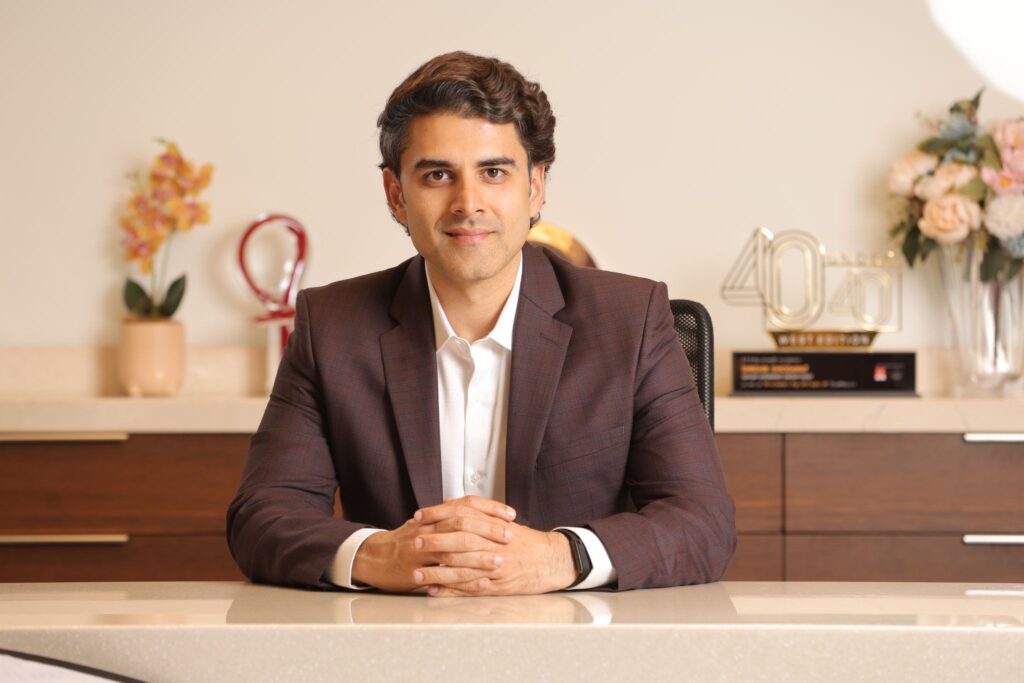
8. You were recognised as the Food and Grocery Retail Icon of India in 2022. Awards tend to solidify a certain image. Does that kind of recognition ever make it harder to take risks, because now there’s a reputation to protect?
A. Awards are truly affirming; they celebrate years of dedication and effort. While recognition can bring a sense of responsibility and raise expectations, I choose to see it as an opportunity rather than a limitation. It inspires me to continue pushing boundaries and to lead with courage and integrity. I believe that honouring any accolade means staying dynamic, embracing new challenges, and striving for growth, even if it requires bold or unconventional choices. For me, recognition is a reminder to keep moving forward and to set a positive example for others.
9. Men in India rarely talk about what they eat in relation to their long-term health. Heart disease, low testosterone, and metabolic issues. It’s all there, but it’s quietly ignored. As someone in the food business, do you feel any responsibility toward that?
A. You’ve touched on an important issue: men’s long-term health and nutrition often don’t get the attention they deserve in India. As someone leading a food business, I feel a genuine responsibility to change that. Our influence goes beyond just providing products; it’s about setting an example and starting conversations that matter. I believe it’s time we break the silence around men’s health, whether it’s heart disease, hormone balance, or metabolic wellness, and encourage men to make more mindful choices about what they eat. If we can use our reach to inspire even a small shift in awareness and habits, I think we’re making a meaningful difference. For me, that’s real leadership, using our platform to drive positive change for the communities we serve.
10. What does your own morning look like? Not the curated version for a press profile. The actual one.
A. Mornings begin with discussions around performance, priorities, and decision-making, ensuring alignment between strategy and execution. Much of the day is spent engaging with leadership teams, assessing progress, addressing challenges, and staying close to operational realities. At a personal level, my mornings are simple and grounded. I make it a point to have breakfast with my family, even if it’s only for a short time, because it helps bring balance before the day gets busy. I also dedicate time to exercise in the morning; it’s essential for my physical and mental well-being and helps me stay energised throughout the day. Before heading to the office, I review the day’s priorities and prepare mentally for the decisions ahead. There’s nothing overly glamorous about it; it’s really a mix of discipline, focus, exercise, and family time that keeps me centred.
11. You’re scaling distribution across Maharashtra and Karnataka. What did you get wrong in the early days that you had to quietly correct later?
A. In the early days, we thought rapid expansion would naturally bring scale. Over time, we discovered that real growth comes from building trust and adapting to local needs. Adjusting our approach made us stronger and more resilient as a business. Those lessons have set the foundation for even more meaningful and sustainable growth ahead.
12. Technology is rewriting how people shop for food, track what they eat, and make nutritional decisions. Is Ghodawat Consumer investing in that intersection? Or is it still primarily a product and distribution play?
A. We recognise that technology is fundamentally changing how people shop, track their nutrition, and make food choices. At Ghodawat Consumer, we are actively investing in this intersection, not just focusing on product and distribution, but also embracing digital tools and data-driven insights. We’re working on initiatives that help consumers make more informed choices, from collaborating with nutrition experts to exploring digital platforms that promote transparency and engagement. Our goal is to be at the forefront of this shift, ensuring we meet evolving consumer needs through both innovative products and smarter, tech-enabled experiences.
13. If you had to build something outside the group, completely from scratch and on your own terms, what would it be?
A. If I were to build something completely from scratch, it would be a platform for children focused on nurturing curiosity, creativity, and confidence from an early age. I would want to create a space where kids can learn through real-world experiences, develop life skills, and explore entrepreneurship in an engaging way. I believe every child has immense potential. The real opportunity lies in giving them the right exposure and encouragement to discover it and shape their own future.
