The Indian wedding industry has undergone a remarkable transformation over the past decade. While bridal fashion continues to command attention, a parallel evolution is taking place in menswear, where grooms are increasingly embracing style, individuality, and self-expression. Today’s groom is no longer satisfied with simply following tradition; he wants his wedding attire to reflect his personality, aspirations, and unique story. This shift has created exciting opportunities for designers who understand the changing expectations of modern men, particularly within the luxury wedding segment.
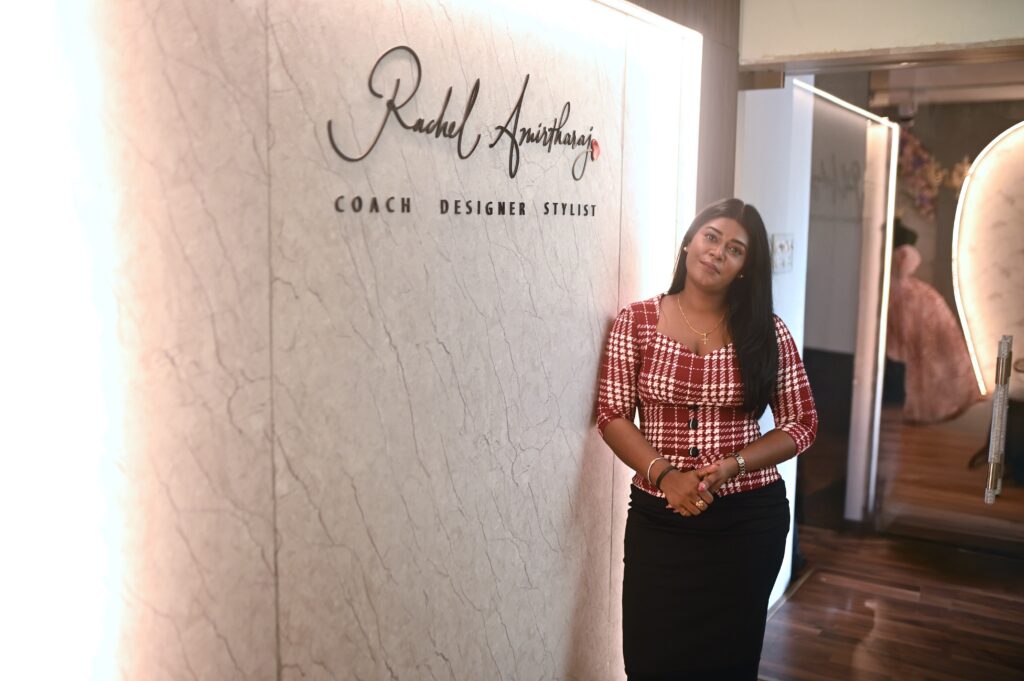
Among the designers contributing to this evolution is Rachel J. Amirtharaj, Founder and Creative Director of La Fantaisie. Known primarily for her expertise in bridal couture, Rachel has expanded her creative vision into menswear with a fresh perspective that blends craftsmanship, storytelling, and contemporary elegance. Her Spring Summer 2026 collection explores the idea of the modern groom through statement tuxedos enriched with intricate textures, heritage-inspired detailing, and artistic influences drawn from nature. Rather than treating menswear as a secondary category, Rachel approaches it with the same level of creativity and couture sensibility traditionally associated with bridal fashion. In this conversation, she shares the inspiration behind her latest collection, her views on the evolving Indian groom, and how La Fantaisie is helping redefine the future of wedding menswear.
1. Your Spring Summer 2026 collection for La Fantaisie introduces a strong narrative in menswear. What inspired you to reimagine the modern groom through this lens?
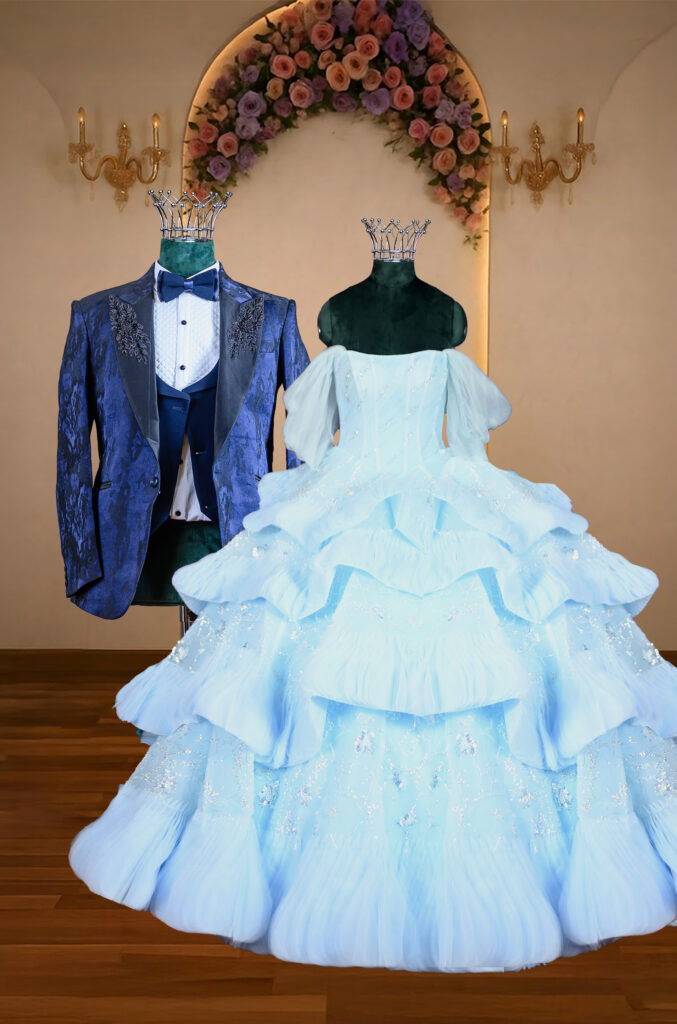
The inspiration came from observing a clear shift in how Indian grooms are approaching their weddings today. They are no longer content being understated or secondary to the bride; they want their individuality to be expressed just as strongly. With La Fantaisie Summer Spring 2026, I wanted to move away from formulaic occasion wear and instead build a narrative-driven wardrobe for the groom, one that reflects emotion, personality, and artistry. The idea was to create pieces that feel celebratory yet deeply personal, allowing the groom to own his moment with confidence and elegance.
2. The collection features unique inspirations, from peacock motifs to honeycomb structures. How do you translate such intricate natural elements into wearable tuxedo designs?
Nature offers an incredible design language; it’s structured yet organic, intricate yet balanced. Translating this into menswear involves a careful process of abstraction. For instance, peacock motifs are not used literally but reinterpreted through fluid embroidery patterns and tonal threadwork, while honeycomb structures inspire geometric textures and layered surfaces. The key is restraint, ensuring that these elements enhance the silhouette rather than overpower it, so the final piece remains refined and wearable.
3. Indian menswear has long been dominated by sherwanis. What drove you to focus on statement tuxedos as a key offering for grooms?
While sherwanis hold cultural significance, I felt there was a gap in the market for elevated, couture-level tuxedos designed specifically for Indian celebrations. Modern weddings are increasingly global in their aesthetic, and many grooms are looking for something that bridges tradition with contemporary sophistication. Statement tuxedos allow for that versatility; they can be dramatic, artistic, and deeply expressive, while still maintaining a sharp, timeless appeal.
4. How would you define the new-age Indian groom, and how is his fashion sensibility evolving compared to previous generations?
The new-age Indian groom is self-aware, experimental, and detail-orientated. Unlike previous generations that often followed conventional choices, today’s groom is actively involved in styling his look. He values craftsmanship, fit, and storytelling. He’s also more open to textures, layered styling, and unconventional colour palettes. There’s a growing appreciation for fashion as a form of self-expression rather than just tradition.
5. Your designs beautifully balance sharp tailoring with artistic detailing. How do you ensure that these statement pieces remain both comfortable and practical for long wedding celebrations?
Comfort is as important as aesthetics, especially in Indian weddings that span long hours. We focus heavily on construction, lightweight canvasing, breathable fabrics, and precise tailoring that allows movement. Even with intricate embellishments, we ensure they are strategically placed to avoid discomfort. The goal is to create garments that feel effortless to wear while still making a strong visual impact.
6. The use of textures inspired by sandalwood carvings and shell artistry adds depth to the collection. How important is heritage craftsmanship in shaping your menswear designs?
Heritage craftsmanship is at the heart of everything we do. Techniques inspired by sandalwood carving or shell artistry bring a tactile richness that cannot be replicated through machine processes. These influences allow us to preserve traditional artistry while presenting it in a contemporary format. It’s about honouring the past while evolving it for today’s audience.
7. Do you see Indian grooms becoming more experimental with colours, patterns, and silhouettes? What trends are you observing for the upcoming wedding season?
Absolutely. Grooms are moving beyond blacks and ivories into deeper jewel tones, muted pastels, and even unconventional shades like sage, rust, and midnight blue. There’s also a strong shift towards textured fabrics, tonal embroideries, and layered styling. Silhouettes are becoming sharper yet more fluid, with an emphasis on individuality rather than uniformity. Personalisation is the biggest trend—we’re seeing grooms want pieces that feel uniquely theirs.
8. As a designer, what are some of the biggest challenges you faced while developing a couture-focused menswear line, especially in a market still rooted in tradition?
One of the biggest challenges is changing perception. Menswear, especially for weddings, has long been seen as functional rather than expressive. Introducing couture-level detailing and unconventional designs requires educating the consumer and building trust. Another challenge is balancing innovation with wearability, ensuring that even the most experimental pieces still resonate with the cultural context of Indian weddings.
9. Tell us about your journey as a designer. What were some defining moments that shaped your identity and led to the creation of La Fantaisie?
My journey has always been rooted in storytelling through design. Early on, I realised that fashion is not just about clothing; it’s about creating experiences and emotions. Working across different design spaces helped me understand the importance of detail, craftsmanship, and narrative. The creation of La Fantaisie was a natural extension of this philosophy, a platform where I could merge artistry with couture and bring a more imaginative, expressive approach to occasion wear.
10. Menswear couture in India is still an emerging space. What gaps did you identify in the market that this collection aims to address?
There is a clear gap in high-concept menswear that combines craftsmanship, innovation, and individuality. While there are many options available, very few focus on storytelling or offer a truly couture experience for grooms. With this collection, we wanted to create pieces that are not just garments but statements designed with the same level of detail and thought traditionally reserved for womenswear.
11. With increasing global influence on Indian weddings, how do you strike a balance between international aesthetics and Indian sensibilities in your tuxedo designs?
The balance lies in subtlety. The silhouettes may be globally inspired, but the detailing, textures, and craftsmanship are deeply rooted in Indian traditions. We avoid overt fusion and instead focus on integration, where the garment feels cohesive rather than hybrid. This allows the designs to resonate both locally and internationally.
12. Looking ahead, what are your future plans for menswear at La Fantaisie? Can we expect more innovation or expansion in this segment?
Menswear is definitely a key focus for us moving forward. We plan to expand into more diverse categories within occasion wear, while continuing to push boundaries in design and craftsmanship. Innovation will remain central, whether through new techniques, materials, or design narratives. Our goal is to redefine how menswear is perceived in the couture space and continue offering grooms something truly distinctive.
In many ways, Ms Rachel’s menswear vision arrives at a moment when the Indian wedding itself is being redefined. For decades, the groom occupied a relatively predictable space within wedding fashion — sherwanis, dhotis, panjabis, and eventually the occasional reception suit became almost inherited choices, worn more out of convention than individuality. The bride evolved season after season; the groom, for the longest time, remained static. But modern Indian weddings no longer function through those old hierarchies.
Today’s groom is more fashion-aware, more emotionally invested in presentation, and far more willing to experiment. He travels, consumes global luxury fashion, understands tailoring, and increasingly wants his wedding wardrobe to reflect personality rather than protocol. Ms Rachel appears to have recognised this shift instinctively. Her decision to move toward couture-led tuxedos instead of remaining within traditional occasion wear feels deeply intentional — a response to how contemporary Indian men now see themselves within the wedding narrative.
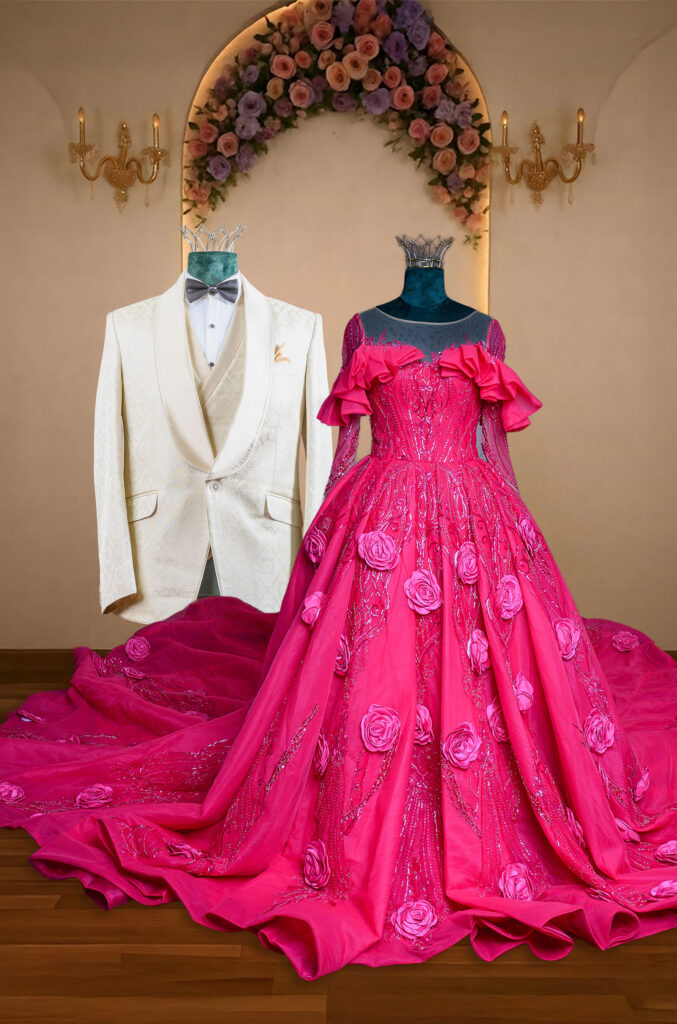
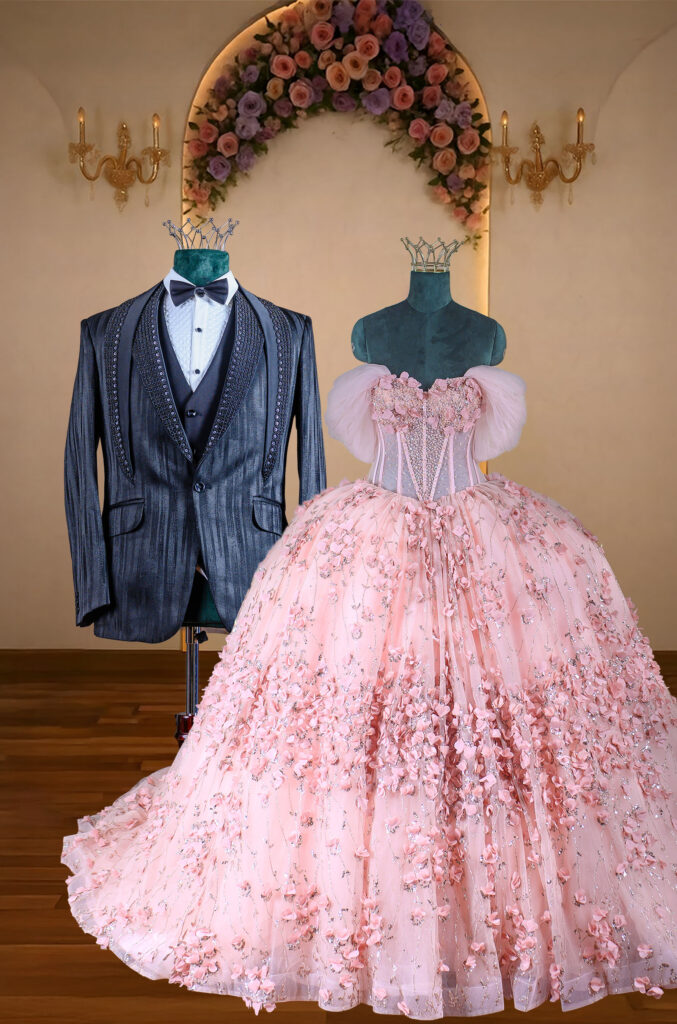
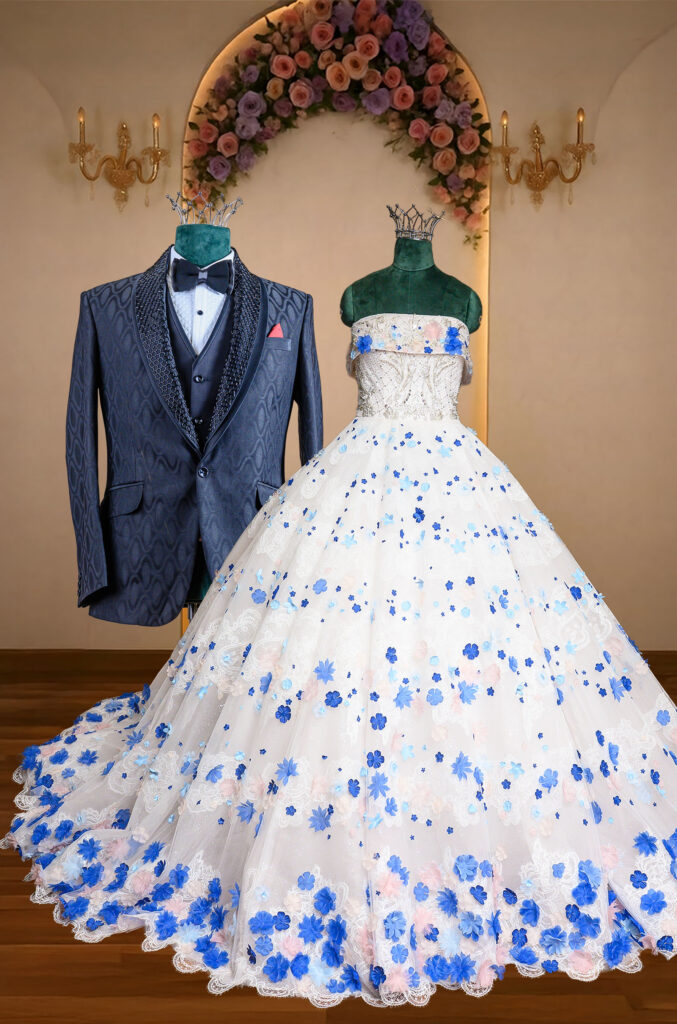
What makes La Fantaisie’s Spring Summer 2026 collection compelling is that these tuxedos do not abandon Indian sensibilities while embracing Western structure. Instead, Rachel J Amrithraj merges both worlds through layered textures, tonal embroideries, and heritage-inspired craftsmanship drawn from peacock motifs, sandalwood carvings, shell artistry, and honeycomb patterns. The hand-finished detailing, jewel-toned palettes, tactile surfaces, and ornamental richness borrow heavily from the language of Indian bridal couture yet are interpreted with the restraint and sharpness of contemporary tailoring. The garments carry drama but never noise – designed not as conventional formalwear but as occasion pieces suited to the scale, emotion, and visual theatre of the modern Indian wedding.
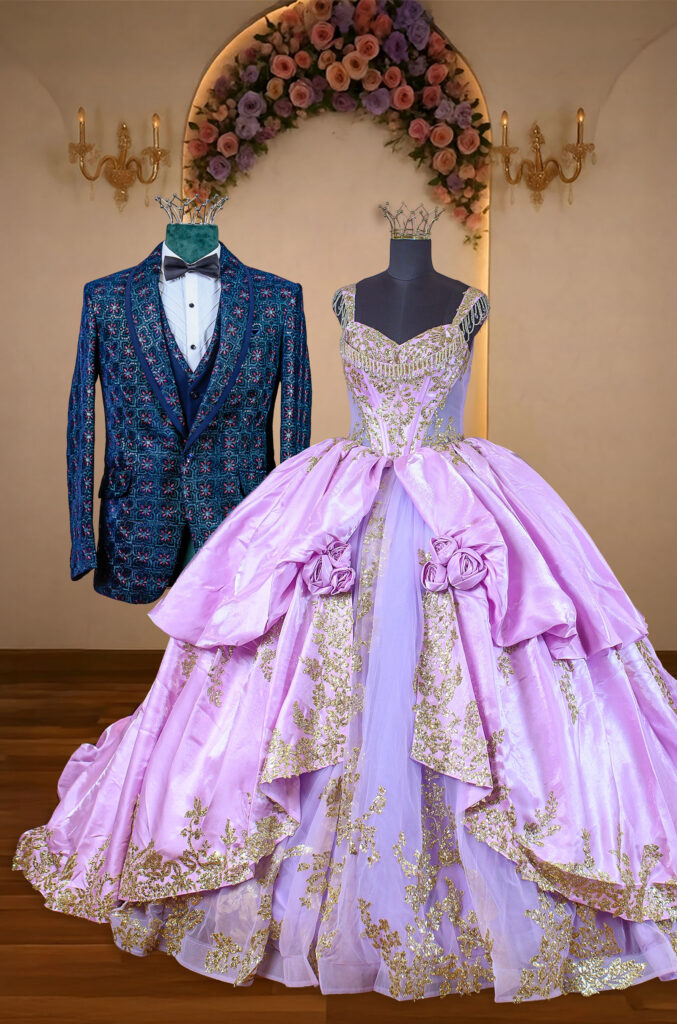
And then come the accompanying lehengas – sculptural, romantic, almost dreamlike in silhouette. Together, they create a striking visual dialogue. Not bride versus groom, not tradition versus modernity, but two equally expressive identities sharing the same frame. Perhaps that is Ms Rachel’s most significant contribution to contemporary wedding couture: understanding that today’s Indian groom no longer wants to simply attend the spectacle. He wants to belong to it aesthetically, emotionally, and unapologetically.
Rachel J Amirtharaj’s approach to menswear reflects a larger shift taking place across Indian weddings, where grooms are embracing fashion as a meaningful form of self-expression. Through La Fantaisie, she combines traditional craftsmanship with contemporary tailoring to create garments that feel both personal and aspirational. Her focus on storytelling, comfort, and individuality offers a refreshing perspective in a category that is rapidly evolving. As wedding fashion continues to become more inclusive and expressive, Rachel’s work demonstrates that modern menswear can be every bit as artistic, detailed, and memorable as bridal couture while remaining rooted in elegance and craftsmanship.
