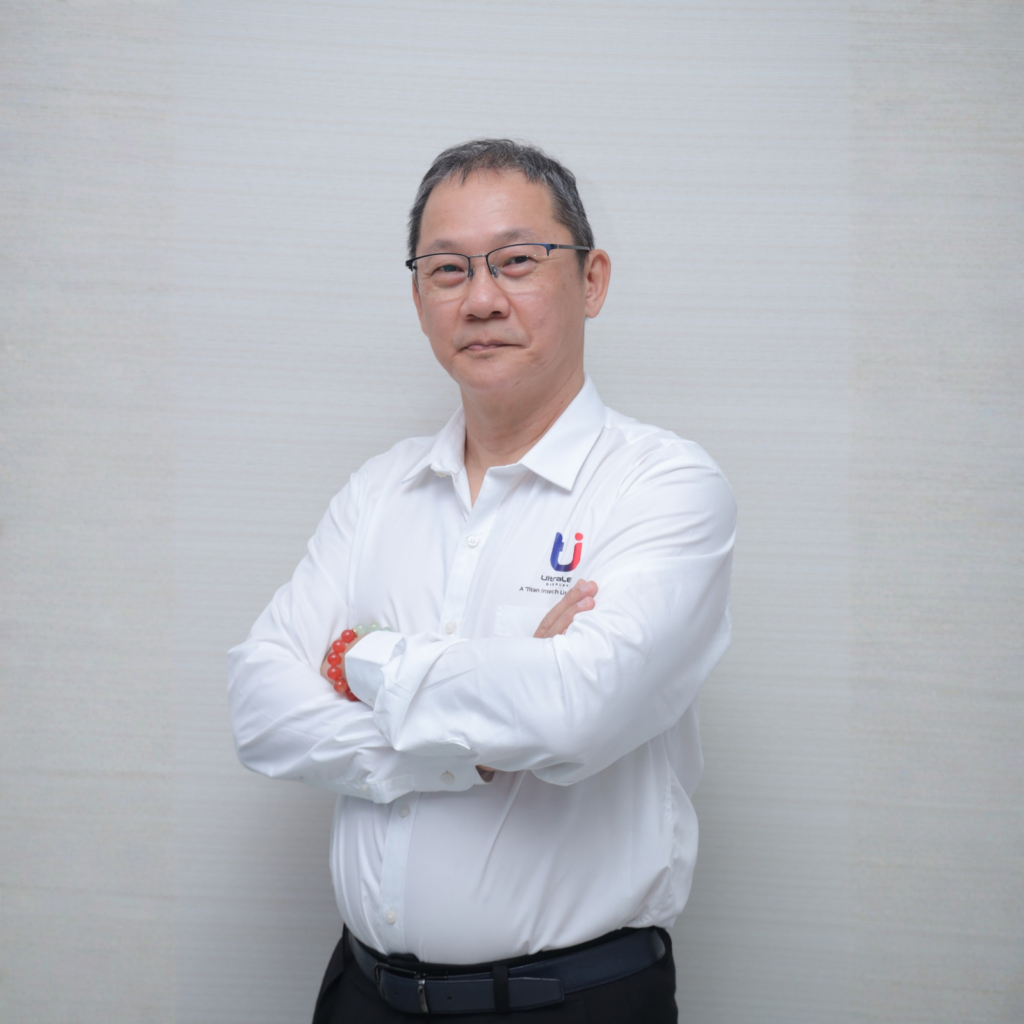
Su Piow Ko, Director, Titan Intech Ltd, on healthcare technology, visual communication, and UltraLED’s vision for building advanced display solutions from India
As healthcare becomes increasingly digital, the way information is presented can be just as important as the information itself. From hospital command centres and patient navigation to public health messaging and wellness environments, advanced display technologies are creating new possibilities for faster, clearer and more contextual communication.
We spoke to Mr. Su Piow Ko, Director at Titan Intech Ltd, about UltraLED Displays’ ambitions, India’s growing display-manufacturing opportunity, and how smarter visual communication could influence healthcare, wellness and everyday health decisions.

What drew you to Titan Intech and the UltraLED journey specifically, and what excites you most about what you are building here?
What attracted me to Titan Intech was the opportunity to build something transformative at a time when India is accelerating its ambitions in advanced technology manufacturing. Having spent much of my career working with global display companies, I recognized a clear opportunity to combine international expertise with local innovation.
UltraLED is not simply introducing display products to the market. We are creating an integrated ecosystem that brings together engineering, manufacturing, deployment and service under one vision. What excites me most is the ability to reduce dependence on imported solutions while delivering technologies that meet global standards.
With Titan Intech’s four decades of engineering strength behind us, we have the foundation to shape a more self-reliant and globally competitive display industry for the future.
How do you see advanced display technologies contributing to smarter and more efficient healthcare environments in the coming years?
Healthcare is becoming more dependent on data, and how that information is displayed can directly influence decisions. I see advanced display technologies playing a much bigger role in diagnostics, surgical planning, monitoring centres and collaborative care.
With technologies such as COB and MicroLED, displays are becoming more accurate, reliable and comfortable for long hours of use. That matters in environments where every detail counts.
At the same time, hospitals are becoming more connected, and high-performance displays can help teams access and interpret information faster. I believe the future is about creating intelligent visual environments that improve efficiency, support better collaboration and ultimately help healthcare professionals deliver a higher standard of patient care.
In your view, what role can immersive visual communication play in improving public awareness around health and wellness?
I see immersive visual communication as a powerful shift in how people understand health and wellness because it turns information into something immediate, visual and easier to act upon.
When important messages are delivered through high-impact LED environments in public spaces, they naturally draw attention and can be more memorable than static notices. In hospitals, transport hubs and community areas, such systems can support preventive-care awareness, hygiene guidance and real-time emergency communication.
This approach ensures that critical information reaches people at the right moment in a form they can quickly understand and respond to. When communication feels alive and contextual, it can help shape healthier habits and improve public responsiveness.
Men in particular tend to disengage from health messaging. Can better visual communication meaningfully change that behaviour?
As I see it, men often disengage from traditional health messaging not because they do not care, but because the communication style lacks immediacy and relevance.
Better visual communication can change that by making information more direct, situational and difficult to ignore. High-impact visuals in public spaces or workplaces can present health cues in real time, using clarity instead of lengthy explanations.
When messages are brief, visual and context-driven, they can reduce resistance and improve recall. Over time, repeated exposure in everyday environments can help normalize preventive behaviour without forcing attention.
The key is not louder messaging but smarter design that meets people where they are and speaks in a language the mind can process quickly and naturally.
As men become increasingly reliant on digital ecosystems, how can display technologies support healthier and more informed lifestyles?
With growing immersion in digital ecosystems, the challenge is not the visibility of health information but its ability to cut through attention overload and behavioural inertia.
Display technologies can contribute by translating complex health messaging into minimal, situational cues that align with decision moments rather than abstract awareness. For men, who often respond more to utility than instruction, this shift matters.
When visual systems integrate into environments such as workplaces, transport nodes and civic spaces, they can reduce the friction between awareness and action. The effectiveness lies in restraint, not volume: a single well-timed visual prompt can sometimes outperform repeated messaging.
Smart hospitals are still aspirational in most of India. Where do you see LED display technology fitting into that transition first?
Smart hospitals are essentially built around one idea: better decisions through better information flow across every layer of care.
In that setup, LED display systems can support different parts of the hospital wherever speed, clarity and coordination matter. In emergency rooms and OPDs, they can help with real-time triage updates, patient movement and clearer communication with attendants.
In command centres, they can bring hospital activity into one live visual view for faster coordination between departments. In waiting and navigation areas, they can reduce uncertainty through simple guidance, token status and health information.
In ICUs and operating theatres, they can assist clinical teams with live monitoring visuals and shared situational awareness.
Across all these points, the value is not in the display itself but in how it makes critical information easier to see, understand and act on without slowing down care.
Mental health environments, rehabilitation spaces and corporate wellness centres are emerging categories. Is UltraLED building with those use cases in mind?
We are seeing these environments as an important part of where visual communication is heading.
Mental health spaces, rehabilitation centres and corporate wellness setups require a very different language from traditional display applications. The emphasis is not on intensity, but on calmness, rhythm and emotional balance.
At UltraLED Displays, we are building systems that can support that shift through controlled brightness, soft visual transitions and content that can be tailored to therapeutic and wellness contexts.
The idea is to make displays feel less like screens and more like supportive environments that can guide attention without overwhelming it.
From a global perspective, which markets are leading in health-tech display adoption, and what does India need to close that gap?
Globally, the most advanced adoption is in places like the United States, parts of Western Europe, Japan and South Korea, where hospitals already treat visual systems as part of their core infrastructure rather than simply communication tools.
There, displays are tightly linked with hospital data systems, patient flow and real-time monitoring, so they actively support clinical and operational decisions.
In India, the gap is less about access to technology and more about the depth of integration inside hospital workflows. The real need is stronger system-level adoption, better standardisation of digital processes and a shift in mindset where visual infrastructure is seen as part of hospital operations, not an add-on.
If that alignment happens, India has the opportunity to combine its scale with fast digital adoption across healthcare networks.
UltraLED aims to build globally competitive solutions from India. What opportunity do you see for India in the global LED display market?
India is at a very interesting inflection point in the global LED display market. The opportunity is not just in consumption but in becoming a serious innovation and manufacturing hub for next-generation display technologies.
Global demand is moving toward COB, MicroLED, MiniLED and energy-efficient architectures, and India has the advantage of scale, engineering talent and a rapidly expanding digital infrastructure.
The real opening lies in building complete ecosystems rather than isolated products, where design, manufacturing, deployment and service are tightly integrated.
If India continues strengthening its electronics manufacturing base and reduces dependence on fragmented imports, it can move from being a high-volume market to a credible global supplier of advanced display solutions.
That is where companies like UltraLED see the biggest opportunity: building globally competitive technology from India that is also optimised for real-world conditions.
With ₹60 crore being invested over the next 12 to 18 months, how much of that is directed toward health-tech applications specifically?
At UltraLED Displays, the focus is on building high-reliability display systems that naturally extend into critical environments like healthcare, command centres and real-time monitoring spaces.
Rather than isolating health applications as a separate stream, the emphasis is on strengthening core capabilities such as precision engineering, system integration and long-term stability, which are essential across these use cases.
The idea is to create a unified technology base that can serve multiple sectors while still meeting the demands of clinical environments where clarity, uptime and responsiveness are non-negotiable.
In an age of information overload, what makes visual communication more impactful than traditional channels?
Visual communication is more impactful today because it removes some of the friction involved in processing information.
People are overloaded with text, notifications and fragmented messages, so attention has become the real limitation, not access to information.
A well-designed visual can deliver meaning quickly without requiring extensive reading or interpretation. It also brings timing and context together, showing the right message at the moment it is needed instead of expecting people to search for it.
What emerging trends in display technology do you believe will shape the next decade of healthcare, wellness and public engagement?
The direction display technology is moving in is very clear: it is becoming less about screens and more about intelligent environments.
In healthcare, I see the biggest change in how information is unified in real time, where patient data, diagnostics and operations come together visually to support faster clinical decisions.
In wellness spaces, the focus shifts to calm, adaptive communication, where displays respond to human state instead of overwhelming it, supporting focus, recovery and balance.
In public environments, the future is contextual communication, where information changes with time, place and need, so it feels relevant rather than repetitive.
Across all of this, the real shift is toward reducing cognitive load and making information feel natural, immediate and quietly supportive instead of constantly demanding attention.
If you could define UltraLED’s mission in one statement, what lasting impact would you like the brand to have on businesses, communities and everyday lives?
Our mission is to build intelligent display ecosystems that turn complex information into clear, real-time understanding.
We aim to help businesses make faster and more precise decisions through better visual intelligence. At the same time, we want to keep communities better informed and make everyday environments more connected, responsive and human-centric through meaningful communication.
Best for Him focuses on helping men make better decisions about their health and well-being. In your view, how can visual display technology help engage men—who are often less likely to actively seek health information—and encourage more proactive health choices?
The deeper challenge is not that men lack interest in health, but that health communication often arrives in a form that does not respect how men actually move through the world.
Visual display technology can change that by meeting people in motion, not in reflection, and by turning health into a quiet presence rather than a moral lecture.
A well-placed visual cue can work almost like a conscience in the background—reminding without shaming, guiding without demanding.
When communication becomes clear, brief and woven into daily environments, it speaks to instinct before resistance has time to build. That is where behaviour begins to shift: not through pressure, but through repeated moments of recognition that slowly become action.
As healthcare becomes increasingly digital, the way we receive and process health information matters more than ever. For UltraLED’s Su Piow Ko, the future lies in making that information clearer, smarter and part of the environments we already live and work in. Whether that can translate into healthier choices for men remains to be seen—but the technology is certainly moving in that direction.
