SPF 50+, PA++++ protection, a featherlight texture and no white cast. Bioderma’s Photoderm XDefense Invisible sounds like the kind of sunscreen that could finally make daily sun protection effortless. There’s just one catch: it costs ₹2,199 for 40 ml. Is it genuinely worth the splurge?
Let’s be honest: most men don’t want a 10-step skincare routine. They want a face wash that works, a moisturiser that doesn’t feel like cooking oil, and a sunscreen they can slap on before heading out the door.
That last part is where things often go sideways. One sunscreen leaves you looking like you’ve auditioned for a ghost movie. Another makes your face feel greasy before you’ve even reached the office. And in India’s heat and humidity, a heavy, sticky formula can turn an otherwise decent morning into a sweaty mess.
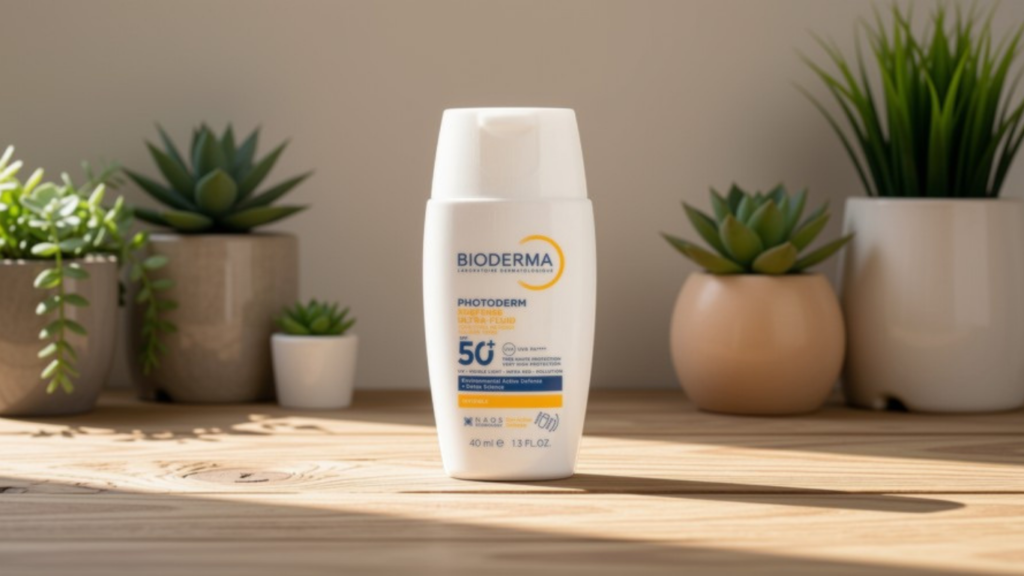
Bioderma’s Photoderm XDefense Ultra-Fluid SPF 50+ Invisible aims to fix that. It pairs high sun protection with a lightweight, non-tinted formula and ingredients designed to help the skin deal with environmental stressors.
On paper, it’s an appealing package. But with a premium price tag, added fragrance and some ambitious claims about environmental protection, there’s more to unpack than the promise of an invisible finish.
First things first: What exactly are you buying?
Bioderma offers the Photoderm XDefense in two versions: Invisible and Tinted. This review focuses on the Invisible variant, which is designed to protect your skin without adding colour or giving your complexion the appearance of makeup.
The Tinted version takes a different approach, using pigments to provide some coverage alongside sun protection.
The distinction is simple but important. Want sunscreen that disappears into your routine without changing how your skin looks? Invisible is the obvious starting point. Want a little complexion evening as well? The Tinted version may be more your thing.
The Invisible sunscreen comes in a 40 ml bottle, with an Indian MRP of ₹2,199. It’s marketed for adults and teenagers, promising broad-spectrum sun protection, hydration and an ultra-fluid texture with a dry-touch finish.
It’s a lot of promises for a fairly small bottle. Let’s see how they stack up.
SPF 50+ and PA++++: The protection that actually matters
Before getting distracted by fancy ingredients and elegant packaging, let’s talk about the sunscreen’s main job: protecting your skin from the sun.
SPF 50+ indicates a high level of protection against UVB rays, which are primarily responsible for sunburn. The PA++++ rating indicates very high UVA protection. UVA rays penetrate deeper into the skin and contribute to premature ageing, pigmentation and cumulative skin damage.
In other words, this isn’t just about avoiding a red nose after an afternoon outdoors. Consistent sun protection also matters for maintaining healthier-looking skin over the long term.
The formula uses a combination of UV filters, including:
- Tinosorb S: A broad-spectrum filter that helps protect against UVA and UVB radiation.
- Avobenzone: A UVA filter that helps protect against longer-wavelength ultraviolet radiation.
- Uvinul A Plus: Another UVA filter, contributing to the formula’s protection against skin-damaging rays.
- Octinoxate: Primarily a UVB filter.
- Ethylhexyl Methoxycrylene: A supporting ingredient used in sunscreen formulations, including to help stabilise other components.
Together, these filters form a sophisticated UV-protection system. That’s especially relevant in India, where sun exposure isn’t limited to beach holidays and weekend outings. Your daily commute, a quick walk to lunch, running errands or spending time near sunny windows can all add to your exposure.
Of course, even the fanciest combination of filters won’t do much if you barely apply any sunscreen.
The golden rule: Apply enough to cover your face and neck evenly, and reapply approximately every two hours when outdoors, as well as after swimming, sweating heavily or towelling off. Your actual protection depends on how the product is used, not just the number printed on the bottle.
The texture: Where this sunscreen needs to earn its keep
Here’s the thing about sunscreen: you can have all the impressive protection claims in the world, but if the formula feels awful, you’re less likely to use it consistently.
That’s why XDefense’s ultra-fluid texture is such an important part of its appeal.
Bioderma describes the Invisible formula as lightweight, ultra-dry-touch and invisible on the skin. Rather than feeling like a thick cream that needs to be wrestled into submission, it’s designed to spread easily and sit comfortably on the face.
The other big selling point is the lack of a white cast. For anyone with a medium, brown or deeper skin tone, a sunscreen that doesn’t leave a pale, ashy film can make a world of difference. You want protection, not a complexion that looks noticeably different after application.
Bioderma’s own consumer testing reports that all participants in the cited assessment found the texture ultra-fluid and the finish invisible without white marks. The brand also reports that 73% of participants experienced an ultra-dry-touch finish.
Those numbers sound encouraging, but there’s an obvious caveat: these are manufacturer-reported results, not a guarantee that everyone will have the same experience.
An independent review published in September 2026 offers a useful counterpoint. The reviewer, who tested the Invisible version on dry, sensitive and acne-prone skin in humid Indian conditions, liked its elegant texture and its performance under makeup but noticed a slight satin-like sheen.
And that brings us to an important distinction: lightweight doesn’t automatically mean matte.
A little natural-looking sheen may be perfectly fine if you prefer a healthy, skin-like finish. But if your ideal sunscreen leaves your face looking completely shine-free, XDefense may not deliver exactly what you’re after.
The takeaway? Don’t confuse a fluid texture with a guaranteed matte finish. They’re two different things.
More than sunscreen? Let’s talk about XDefense’s extra claims
Bioderma isn’t positioning XDefense as just another SPF product. Its Environmental Active Defense technology is designed to address environmental aggressors beyond conventional UV radiation, including visible light, infrared radiation and pollution.
The formula also incorporates what the brand calls Detox Science, an approach intended to support the skin’s natural defence mechanisms against environmental stress.
That sounds impressive. But what does it actually mean for your skin?
A few ingredients are worth highlighting.
Ectoin and mannitol
These ingredients are associated with skin-protection and antioxidant-supporting strategies. They’re part of the formula’s broader approach to dealing with environmental stress, although their presence alone doesn’t establish how much additional protection you’ll experience in everyday use.
Glycerin
This is a familiar skincare workhorse. As a humectant, glycerin attracts and helps retain moisture, supporting the skin’s hydration. It’s not flashy, but ingredients like this can make a real difference to how comfortable a sunscreen feels throughout the day.
Sodium hyaluronate
A form of hyaluronic acid, sodium hyaluronate helps the skin retain moisture. It’s a useful addition for anyone who wants sun protection without that tight, dry feeling some formulas leave behind.
Tocopherol
Better known as vitamin E, tocopherol has antioxidant properties and helps round out the formula’s skin-conditioning approach.
The formula also contains silica, which can contribute to its texture and finish.
On paper, it’s a thoughtfully assembled lineup. But this is where it’s worth separating credible ingredient functions from marketing claims that sound more definitive than the evidence allows.
Bioderma reports 99% less cellular damage in an ex-vivo assessment involving skin samples exposed to UV rays, visible light and infrared radiation. It also reports a 164% increase in skin detoxification activity in an in-vitro assessment involving its Detox Science ingredient.
Those figures need context.
An ex-vivo assessment examines biological material outside a living organism, while an in-vitro assessment typically studies processes under controlled laboratory conditions. Neither automatically predicts what will happen when you apply the product to your face during a typical Indian summer.
So no, the 99% figure doesn’t mean you’ll avoid 99% of all skin damage in everyday life. And the 164% figure doesn’t mean your skin will become 164% healthier.
The more reasonable conclusion is that Bioderma has built an additional environmental-protection story around a sunscreen that already offers high stated UV protection. That’s interesting, but the laboratory numbers shouldn’t be the main reason to buy it.
Will it survive Indian heat, humidity and oily skin?
This is where things get interesting.
A sunscreen can feel beautiful in an air-conditioned room and turn into an uncomfortable, shiny layer the moment you step outside. India’s combination of heat, humidity, sweat and pollution makes everyday wearability particularly important.
XDefense’s fluid consistency is promising for anyone who dislikes thick, heavy sunscreen. The reported satin-like finish, however, means you shouldn’t automatically expect a completely matte result.
Here’s how I’d think about it:
- Normal skin: The lightweight texture and natural-looking finish may be a good combination.
- Dry skin: The formula’s moisturising ingredients may help keep the skin comfortable, although your skin may still benefit from a separate moisturiser.
- Combination skin: The fluid texture could be appealing, but the finish may look different across oilier and drier areas of your face.
- Oily skin: Worth considering if you prefer lightweight products, but potentially disappointing if you demand a completely matte finish all day.
- Sensitive skin: Proceed with a little more caution because the formula contains fragrance.
One point in its favour is that the product is described as non-comedogenic, meaning it has been formulated and assessed with the aim of reducing the likelihood of clogged pores.
That doesn’t make breakouts impossible. Acne has multiple causes, and even products labelled non-comedogenic won’t suit every individual.
Then there’s the fragrance.
XDefense Invisible contains parfum. Fragrance isn’t automatically a problem, and plenty of people use fragranced skincare without any issues. But if your skin is reactive, you have a known fragrance sensitivity or sunscreen tends to sting around your eyes, it’s worth being cautious.
Bioderma describes the product as having very good skin and eye tolerance, but that shouldn’t be taken as a promise that nobody will experience irritation.
If you have sensitive skin, patch-test before making it your daily go-to. A premium price doesn’t make a product universally suitable.
Invisible vs Tinted: Which one makes more sense?
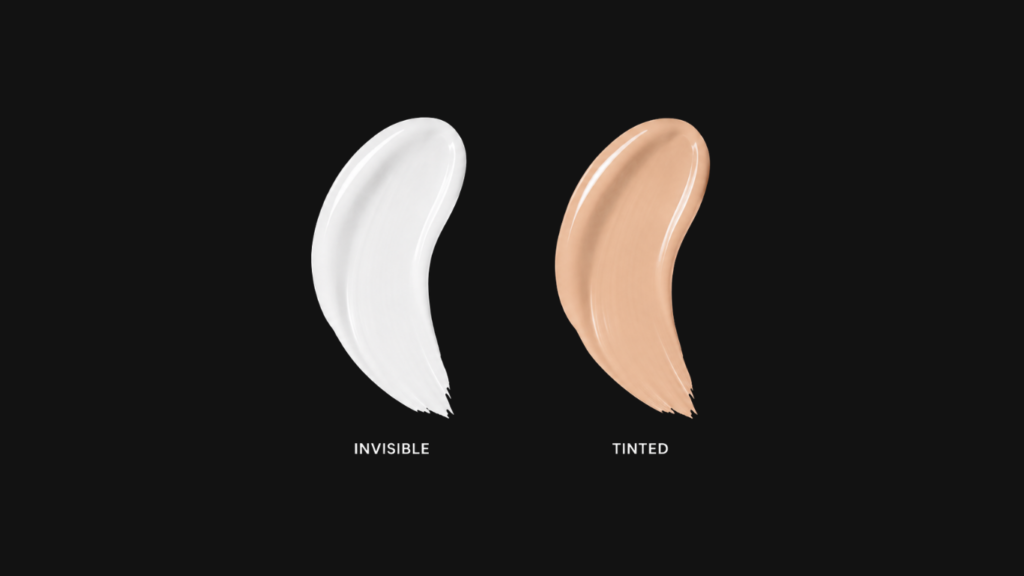
Although the Invisible version is the focus here, it’s worth understanding what you gain or lose by choosing the Tinted variant.
The Invisible version is for people who want sun protection without added colour or complexion coverage. It’s the simpler choice if your skincare routine is about keeping things straightforward.
The Tinted version includes pigments, including iron oxides, and titanium dioxide. Depending on the shade and your skin tone, it may help even out the appearance of your complexion.
Iron oxides are also relevant to visible-light protection, which can be particularly useful when pigmentation is a concern. However, the actual level of protection depends on the complete formulation, its testing and how much product is applied.
Tinted sunscreens also come with a practical consideration: shade matching. Multiple shades may be available in international markets, but availability varies by country and retailer. Don’t assume the full international range is sold in India.
Neither version is automatically superior.
If you want a sunscreen that disappears without adding coverage, go with Invisible. If you like a little complexion correction and can find a suitable shade, Tinted may be worth exploring.
₹2,199 for 40 ml: Is it worth the money?
And now, the elephant in the room.
At ₹2,199 for just 40 ml, XDefense Invisible is undeniably expensive. You’re paying for a combination of high stated UV protection, modern filters, a fluid formulation, skin-conditioning ingredients and Bioderma’s broader environmental-protection positioning.
But here’s the problem with expensive sunscreen: you can’t afford to be stingy with it.
Sunscreen works best when applied in an adequate, even layer. If you’re using it on your face and neck every day, a 40 ml bottle may run out sooner than you’d like. Add regular reapplication during extended outdoor exposure, and the cost starts to climb.
Worse, if the price makes you ration the product or skip reapplication to make the bottle last longer, you’re undermining the very thing you bought it for.
That doesn’t mean expensive sunscreen is never worth it. If cheaper formulas leave a white cast, feel greasy, irritate your skin or simply make you dread applying them, finding a product you genuinely enjoy using can be worthwhile.
Comfort matters because consistency matters.
But let’s not pretend that a higher price automatically translates into better real-world protection. A more affordable sunscreen with appropriate protection that suits your skin and gets applied generously may be a smarter choice than a premium formula you use sparingly.
At the time reflected in the available pricing information, Tata 1mg lists XDefense at ₹2,089 against an MRP of ₹2,199. Retailer prices and discounts can change, so compare the final price before buying.
My advice: Buy it for the texture, finish and suitability if those are the things you value. Don’t buy it simply because the price and marketing make it sound scientifically superior to every cheaper alternative.
The verdict: A premium sunscreen with a clear appeal
Bioderma Photoderm XDefense Ultra-Fluid SPF 50+ Invisible gets several important things right. It offers high stated UVA and UVB protection, a lightweight fluid texture, an invisible finish and a selection of ingredients intended to support hydration and the skin’s response to environmental stress.
Its biggest selling point isn’t the futuristic environmental-protection terminology. It’s the possibility of getting substantial sun protection in a formula you’ll actually enjoy wearing.
For men who’ve given up on sunscreen because it feels sticky, looks chalky or makes their face feel like an oil slick, that proposition is genuinely appealing.
Still, there are trade-offs. The price is steep for a 40 ml bottle. The formula contains fragrance. And while the finish is designed to be ultra-dry-touch, it may leave a subtle sheen rather than the completely matte look some people want.
The additional environmental-protection claims are interesting, but the laboratory figures need to be understood in context rather than taken as guaranteed real-world outcomes.
So, should you buy it?
If you want a premium, non-tinted facial sunscreen, dislike white cast and value a fluid texture enough to justify the price, XDefense Invisible deserves a place on your shortlist.
If you’re fragrance-sensitive, insist on a completely matte finish or simply want the best value for money, test it first and compare it with more affordable alternatives.
Ultimately, the best sunscreen isn’t the one with the most impressive packaging or the biggest price tag. It’s the one that offers appropriate protection, suits your skin and feels good enough that you actually use it every day.
XDefense Invisible could tick those boxes for the right person. Just make sure you’re paying for benefits you’ll appreciate, rather than marketing claims that merely sound impressive.
Product details at a glance
- Product: Bioderma Photoderm XDefense Ultra-Fluid SPF 50+ Invisible Sunscreen
- Size: 40 ml
- MRP in India: ₹2,199
- Sun protection: SPF 50+, PA++++
- Finish: Invisible, with a brand-claimed ultra-dry-touch finish
- Notable ingredients: Modern UV filters, glycerin, ectoin, mannitol, sodium hyaluronate and tocopherol
- Potential drawbacks: Premium price, added fragrance and a finish that may not be completely matte on every skin type
- Best suited to: People looking for high sun protection in a lightweight, non-tinted formula
