Amit Srivastava shares how Nutrify Today is using AI, scientific intelligence, and responsible nutrition to reshape the future of global health and wellness.
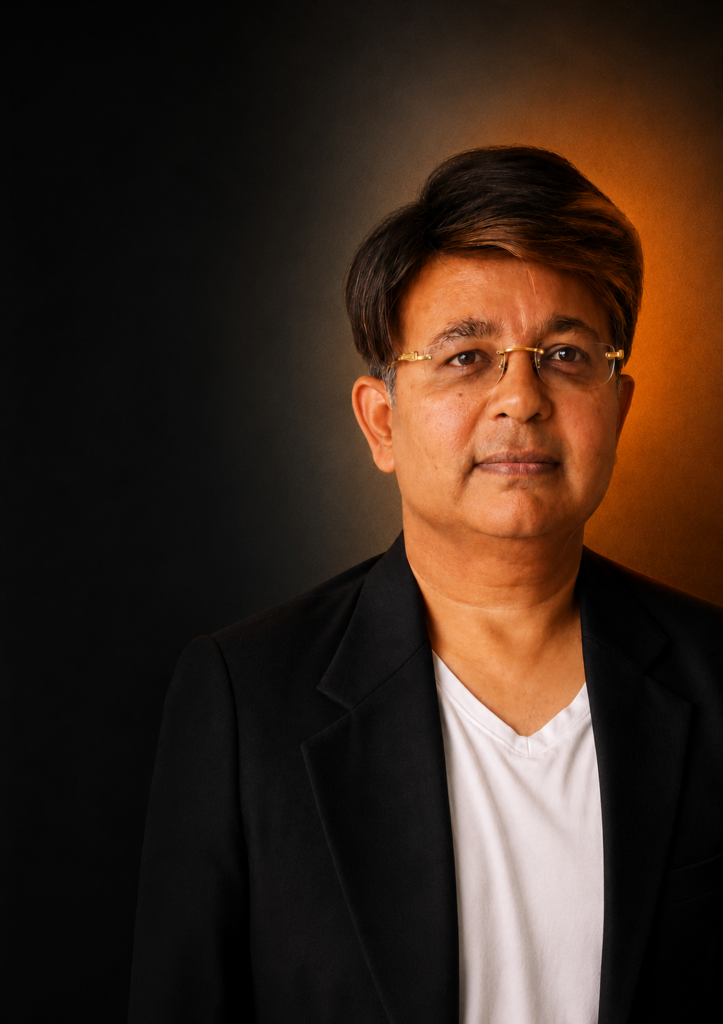
For decades, the nutraceutical industry has operated in fragments. Scientists worked in isolation, brands chased trends faster than evidence, and regulators struggled to keep pace with an industry growing quicker than its own standards. Amit Srivastava recognised that disconnect long before “AI in healthcare” became a boardroom buzzword. After years across life sciences, pharma, and global nutrition markets, he founded Nutrify Today not as another supplement company but as an ecosystem designed to connect science, formulation, regulation, manufacturing, and commercialisation into one intelligent framework.
Today, Nutrify Today and its AI platform, NutrifyGenie, are positioning themselves at the intersection of responsible nutrition and deep-tech innovation. From audited scientific datasets and regulatory intelligence to AI-assisted formulation and global supply-chain mapping, the company is attempting something far larger than product development. It is working to build credibility for an industry often criticised for lacking transparency and scientific rigour.
What makes Amit Srivastava particularly compelling is that he speaks less like a conventional startup founder and more like someone trying to redesign the system itself. His focus is not on disruption for attention but on building long-term structures where science, ethics, AI, and business can coexist responsibly. In his exclusive interview with Best for Him, he speaks about personalised nutrition, the risks of unchecked health AI, the overlooked realities of men’s health, and why the future of wellness may depend less on marketing and far more on trust.
Nutrify Today went live in April 2020 — a month the world will not forget for the right reasons. Most founders were either firefighting or pressing pause. You chose to build something entirely new. What were you seeing at that moment that made you move forward instead of waiting it out?
Honestly, the timing wasn’t a decision I agonised over. April 2020 clarified something that had been sitting at the back of my mind for years—that the nutraceutical industry was structurally broken in ways the market had simply stopped noticing. The gap between innovation and commercialisation was enormous, and it was costing us as an industry far more than we acknowledged.
And in the world’s silence, I saw it all the clearer. Founders had genuinely good science and nowhere to take it. Big companies had internal ability but no pipeline. Regulators were struggling to keep up. And suddenly, consumers had realised that nutrition really did matter to their health. The pandemic didn’t create that opportunity — it just made it impossible to ignore. I’ve always believed that periods of disruption are the best time to build because everyone else is in reaction mode. We launched Nutrify Today in February 2020, and by the time April hit, we had already committed. There was no going back — and frankly, no reason to.
You don’t go by CEO. You call yourself Chief Catalyst — and that title is doing a lot of quiet work. What does it actually mean to you on an ordinary Tuesday, when there’s no event, no press, no pitch — just the business to run?
On a normal Tuesday, the title means I’m the one posing the uncomfortable questions. A CEO leads. A catalyst alters the nature of a reaction — you don’t get consumed in it, but nothing moves without you. That difference is important to me. Most days, my job is to look at where things have stopped flowing: an innovator who can’t find a commercial partner; a brand with good science caught in regulatory quicksand; a conversation between academia and industry that should be happening but isn’t. I’ll go in there and try to get it clear.
It also means I spend a lot of my Tuesday being genuinely curious — reading a paper, talking to a researcher in Hyderabad about a novel bioactive, and thinking through why a product failed in the US despite solid clinical backing. That curiosity isn’t separate from the work. It is the work. If I were running things purely as a CEO, I think the organisation would become operationally efficient but intellectually static. That’s the risk I’m most trying to avoid.
‘Curated Intelligence’ is the phrase you’ve anchored Nutrify Today around. It’s not a term most people in the industry were using before you. Where did it come from, and what were you trying to say with it that more obvious language couldn’t capture?
It came from a frustration with the word ‘data’. Everyone was talking about data—big data, open data, AI-powered data—as if access to volume solved the problem. But in nutraceuticals, volume without rigour is dangerous. You can have a million data points on a bioactive and still get the formulation wrong because the data wasn’t verified, wasn’t contextualised, or didn’t apply to your regulatory jurisdiction. What we built was different. We curated. Our system contains 3.6 million audited entries covering biochemistry, pharmacology, and global regulatory standards – all of which were checked and contextualised before they became usable. “Curated Intelligence” was my way of saying: we haven’t aggregated information; we’ve made it responsible. In an industry where a bad product can cause harm, that difference is not semantic — it’s everything. ‘AI-powered’ sounds impressive. Curated Intelligence describes what actually makes it trustworthy.
NutrifyGenie is your AI platform — and it covers a lot of ground, from formulation to toxicity forecasting. But AI in a domain like nutraceuticals is only as good as what it’s been trained on and who’s interpreting it. Where does the tool genuinely reduce the burden on experts, and where do you still need a human in the room?
NutrifyGenie does the heavy lifting on things that used to require weeks of manual work — screening thousands of bioactives, mapping molecular interactions, flagging potential compliance risks across multiple regulatory jurisdictions, and predicting demand trends from clinical and demographic data. That compression of time is real and significant. What used to take 12 to 18 months in R&D can now be done in weeks. But I draw the line very specifically at this point. When it’s clinical interpretation, safety decisions for certain groups of people, or new combinations of ingredients where there’s limited long-term data, that’s a scientist in the room with judgement, not just parameters. AI complements human expertise; it doesn’t replace it. NutrifyGenie is not meant to answer the hard questions for the expert but to get the expert to the right questions faster. I’m suspicious of platforms that pitch themselves as tools to get rid of expertise. In health, that’s not disruption; that’s a liability.
You built a nutrition portfolio worth ₹200 crore at Dr. Reddy’s. That kind of scale teaches you things no conference talk ever will. Looking back at that chapter now — what did it show you about why good science so often dies somewhere between the lab and the shelf?
It showed me that the problem is rarely the science. When the science is good, it tends to be good. The problem is everything that follows the science – the commercial assumptions, the internal alignment battles, the regulatory navigation, the supply chain complexity, and ultimately the gap between what a product can do and what the consumer is willing to believe.
At Dr. Reddy’s, I saw exceptional formulations that never reached the right consumer because nobody had built the bridge between the lab and the market with the same rigour that went into the clinical work. Companies invest enormously in R&D and then hand the product to a sales team that doesn’t fully understand it. Or they price it so high it’s out of reach. Or the regulatory dossier isn’t strong enough for global markets even when the product is.
I took those lessons very personally. Nutrify Today is essentially my answer to every failure I witnessed in that chapter — a platform built to make sure good science doesn’t get orphaned by poor commercialisation infrastructure.
There’s a structural problem in nutraceuticals that doesn’t get talked about enough — it’s not pharma, it’s not food, and regulators the world over haven’t quite decided what to do with it. For an Indian brand trying to go global today, where does that ambiguity hurt the most?
The pain is most acute at the point of market entry. It can take more time and money to navigate the regulatory inconsistency than it took to create the product for a truly well-formulated, evidence-backed product from an Indian brand. The US has one framework, the EU another, and Southeast Asia another, and within each of those, different rules for claims, labelling, ingredient approval, and manufacturing standards.
An ingredient that’s allowed in India may be on a novel foods list in Europe. A health claim proven by Indian clinical data might not meet the evidentiary standard of a regulated Western market. So the product either gets watered down to fit the most restrictive common denominator, or the company limits itself to markets it can navigate. Both outcomes are a loss. What I believe — and what I’ve tried to build into Nutrify Today’s approach is that regulatory harmonisation isn’t just a policy conversation; it’s a business imperative. If India wants to lead the global nutraceutical narrative by 2047, we need to be building with compliance architecture from day one, not retrofitting it after the fact.
You’ve built a platform that sits between academia, business, and regulators — three communities that have historically been very good at not understanding each other. Which of the three has been the hardest to bring into genuine conversation, and what did it take?
Business, without question. Not because business leaders aren’t intelligent or well-intentioned — they are. But they operate on timelines and pressure structures that are often incompatible with the pace of responsible science. Academia wants to publish. Regulators want to be cautious. Business wants to ship. When those three are in the same room, the pressure almost always moves in the direction of ‘let’s get to market’.
The hard work has been helping businesses understand that slowing down slightly to get the science right actually accelerates the commercial outcome over the medium term — because products with solid evidence don’t just sell better; they survive better. They don’t find themselves in a regulatory tussle three years from now.” For this reason, among others, the C-Suite Sumflex events have been created. Getting decision-makers in a room and hearing from researchers and regulators directly and not through a filtered deck does something a report never can. People stop defending their own timelines and start to see the common threat. That’s when the conversations get serious.
The C-Suite Sumflex events are positioned as something more than networking — you use the word ‘collaboration’, which is easy to say and hard to deliver. What has actually come out of those rooms that wouldn’t have happened otherwise?
I’m proud of the MoU with the Rural Economic Forum – because it wasn’t something that either party walked in planning to do. What began as a conversation on supply chain traceability at the 2025 Sumflex has now resulted in a framework for rural nutraceutical innovations to reach global markets.
That kind of outcome doesn’t happen at a typical industry conference, where everyone is there to present rather than explore. What makes Sumflex different is the format — we’re deliberate about keeping it small enough that people can’t hide behind their presentations. There are no large auditorium sessions where you listen and leave. The conversations happen in real time, with real stakes. We also look to bring people together who normally wouldn’t be in the same room: formulation scientists with supply chain specialists, policy advisors with brand founders. The friction that creates is precisely what produces something new. Two partnerships and a policy recommendation emerging from the 2025 edition were on no one’s agenda when they walked in. That is what collaboration really means to me.
The Center for Responsible Nutrition is an interesting signal to send from a company that’s also selling commercial services. It suggests accountability, not just ambition. What were you responding to when you set it up — what had you seen in the industry that made that feel necessary?
I’d seen too many products reach consumers that had no business being there. Formulations with inadequate evidence, health claims that were aspirational at best and misleading at worst, and ingredients sourced without any traceability. And I’d watched the industry largely look the other way because the regulatory environment was permissive enough to allow it.
The Responsible Nutrition Association of India, which I founded, and the work that eventually led to the Centre for Responsible Nutrition came from a very specific conviction: that the industry’s long-term credibility depends on self-imposed accountability, not just regulatory compliance. You can be compliant and still be irresponsible. What I wanted to build was a norm — a bar that serious players in the industry would recognise as the minimum and aspire to exceed.
The commercial services we provide operate within that framework. I think there’s a misconception that accountability and commercial viability are in tension. My experience is that they reinforce each other. Companies that build responsibly last longer, go further, and ultimately command more trust in global markets.
Men are one of the most underthought demographics in nutraceutical innovation. The category still defaults to muscle, weight, and performance, which misses a lot. What do you think the industry consistently gets wrong about what men actually need from nutrition science?
The industry has essentially built a shorthand for men’s nutrition — testosterone, muscle, energy — and then stopped asking deeper questions. But if you look at the actual burden of disease in men, you see chronic stress, cardiovascular risk, metabolic dysfunction, declining cognitive performance, and hormonal changes that begin earlier than most people realise and are poorly addressed by current formulation strategies.
Men also have different patterns of health-seeking behaviour. They come in late, they underreport symptoms, and they’re less likely to engage with a product that feels clinical or therapeutic. So you have a demographic with real, complex nutritional needs, a limited cultural vocabulary for expressing those needs, and an industry that has chosen to meet them at the gym door rather than at the doctor’s office.
What the industry gets wrong is that it follows the marketing brief rather than the clinical need. Men need nutrition science that takes their whole biology seriously — metabolic health, stress physiology, and cognitive resilience — not just the performance layer. That’s a much harder product to build, but it’s the right one.
You’ve been in this industry for over 25 years. There’s a promise nutraceuticals made to the world a long time ago — about health, prevention, and personalisation — that has only been partially kept. What’s still unfinished, and is Nutrify Today your answer to it?
The unfinished business is personalisation — genuinely getting there, not just using it as a marketing word. The promise of nutraceuticals was always that nutrition could be targeted, evidence-based, and specific to individual biology. We’ve moved in that direction, but slowly. The industry still largely operates on population-level thinking — formulations designed for a broad demographic category rather than a specific biological profile. Advances in genomics, microbiome science, and wearable-generated health data are now creating the infrastructure for truly personalised nutrition, but the formulation and commercialisation side of the industry hasn’t kept up.
That’s the gap I’m working on. NutrifyGenie’s ability to generate geography-specific predictive formulation blueprints is a step towards it. Rx.NutrifyToday.com, our doctor-facing platform, is another — because personalised nutrition that doesn’t go through clinical oversight isn’t truly personalised, it’s just targeted marketing. Is Nutrify Today my answer to the unfinished promise? Partially. I think it will take the next decade to get there fully, and it will require a different kind of collaboration between health science, technology, and policy. But yes — this is exactly what I came back to build.
AI is now entering deeply personal territories — nutrition, ageing, hormones, mental performance, even longevity prediction. As someone working at that intersection, where do you think innovation should slow down and become more responsible?
Longevity prediction is where I would pump the brakes hardest right now. There is a gap between what the science genuinely supports and what some platforms are claiming or implying about their ability to predict lifespan or biological age trajectory. When you combine that with personalised nutrition recommendations, you’re making deeply consequential interventions in someone’s health based on models that may not yet have the clinical validation they need.
The commercial incentive to move fast in longevity is enormous — the market is willing to pay, and the questions are existentially compelling. But health AI, particularly in areas touching hormones, ageing, and mental performance, needs to be developed with the same evidentiary standards we’d apply to a pharmaceutical intervention. That means longitudinal outcome data, transparency about model limitations, and clinical oversight as a non-negotiable component of the product design. Where I think AI can move confidently is in formulation support, regulatory mapping, and supply chain traceability. Where it needs to slow down is anywhere the error margin has direct health consequences for the individual.
Many successful founders eventually begin speaking less about growth and more about sustainability — not just for business, but for the human body and mind. Has your own understanding of ambition changed over the years through your work in health sciences?
It has, more than I expected it to. Spending 25 years in health sciences has a way of making you quite literal about the cost of unsustainable pressure — I’ve watched colleagues burn out, I’ve seen organisations build for speed and collapse for the same reason, and I’ve thought a lot about what healthy ambition actually looks like. For me, it’s become about direction more than pace. I’m as driven as I’ve ever been — possibly more so, because the problem we’re trying to solve is genuinely important. But my definition of progress has shifted.
I’m less interested in how fast we grow and more focused on whether what we’re building actually holds up — scientifically, commercially, structurally. The analogy I come back to is clinical research itself. You can rush a trial, but what you get is unreliable data. Sustainable ambition is about building something whose results you can actually trust. That takes longer, but it lasts. And in health — both the business of it and the practice of it — lasting matters.
You started out consulting life sciences companies across Asia, early in your career, before any of this existed. What did that version of Amit Srivastava not yet understand about what it actually takes to move an industry — and when did that understanding arrive?
That version of me understood technology, understood science, and understood business fairly well. What he didn’t fully understand was the human architecture underneath all of it — the relationships, the trust, the patience required to change how an entire ecosystem thinks and behaves. I had an engineer’s instinct early on: here is the problem, here is the better solution, but why aren’t people moving?
What I’ve learned — and the understanding arrived slowly, through setbacks more than successes — is that industries don’t move because someone presents a better solution. They move when enough people trust the person presenting it, when the timing is right, when the economic incentive aligns with the directional change, and when there’s a community that has decided together to move.
That’s why Nutrify Today isn’t just a technology platform. It’s a community and a conversation. The C-Suite Sumflex, the academy, the responsible nutrition framework — all of it is about building the human infrastructure that allows the technology to actually land. Early Amit would have built a better product and been puzzled when it didn’t automatically transform the industry. Present Amit understands that the product is only part of the story.
Finally, after decades in healthcare innovation, what concerns you most about the direction modern society is heading in — and what still gives you hope when you think about the future of human health and wellbeing?
What disturbs me most is speed without wisdom. We are developing health technologies and interventions faster than our social, ethical, and regulatory infrastructure can evaluate them. However, this is a particularly sensitive space for nutrition because it interfaces with culture, identity, and daily life in ways that a drug intervention doesn’t.
The commercialisation of health AI, personalised supplements, and longevity protocols is outrunning our ability to assess long-term consequences. That worries me. The other concern is inequality of access. The same technologies that could genuinely improve health outcomes for everyone are being developed primarily for people who can already afford good healthcare. If preventive nutrition becomes another premium product for the affluent, we’ve solved the interesting problem but missed the important one.
What gives me hope is the generation coming into the industry now. The researchers, founders, and policy thinkers in their thirties who are building with a different set of values, where responsibility isn’t a constraint, it’s the starting point. And the genuine appetite in markets like India to leapfrog older models and build health infrastructure that works at scale, not just for the top of the pyramid. That combination of scientific rigour and social intent is where the real future of human health lies. I intend to be part of making it happen.
